

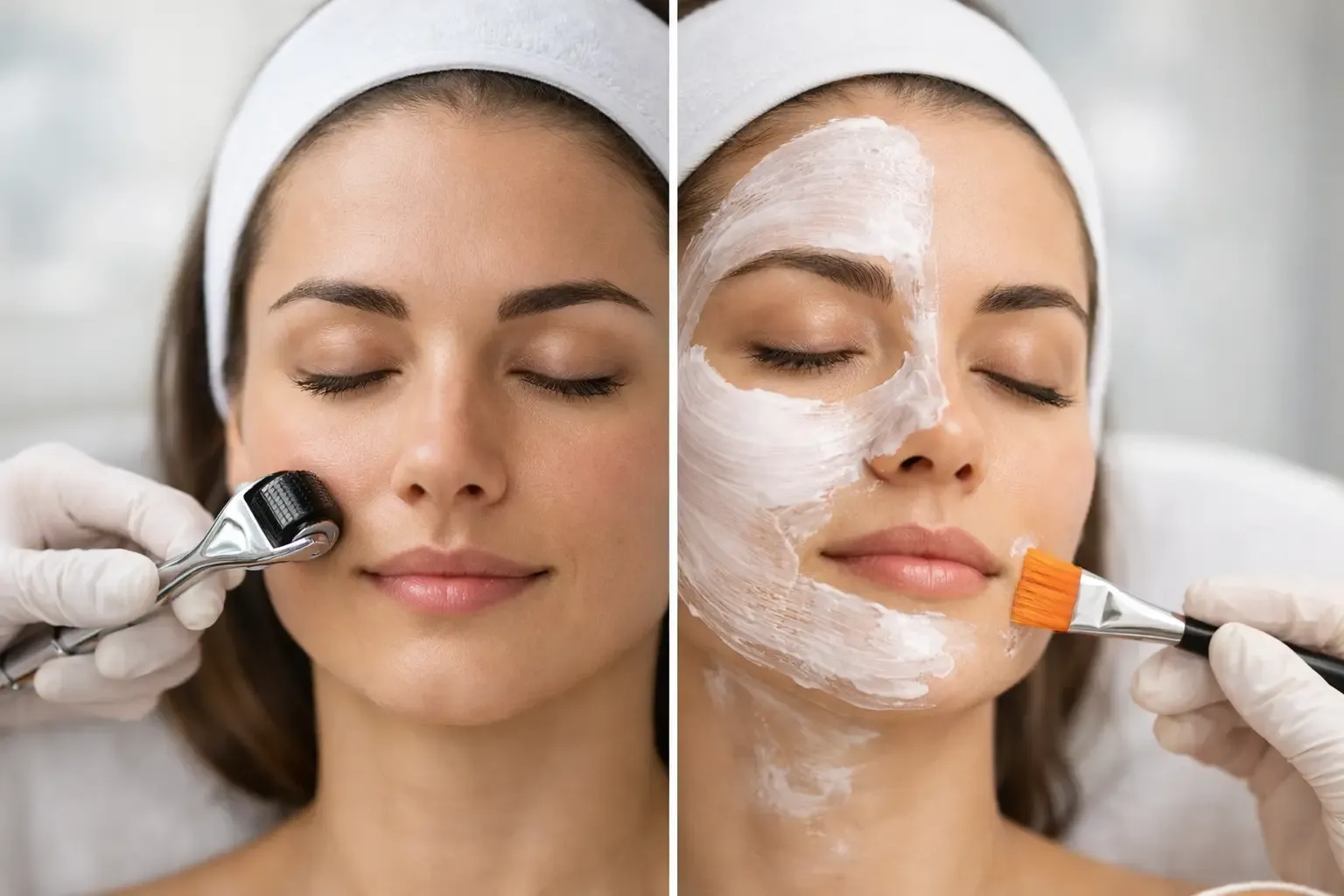
A polished complexion is rarely the result of a single treatment chosen in isolation. When comparing microneedling versus chemical peel results, the better option depends on what is happening beneath the surface of your skin: collagen loss, uneven pigment, acne scarring, texture, congestion, or a combination of concerns. Both treatments can create meaningful improvement, but they work through very different pathways and follow different timelines.
For clients who want refreshed, natural-looking skin without looking overtreated, the decision should begin with an expert assessment of skin tone, sensitivity, lifestyle, and the level of correction desired. The most refined results come from a treatment plan calibrated to your skin, not from selecting the strongest procedure available.
Microneedling Versus Chemical Peel Results: The Key Difference
Microneedling creates controlled microchannels in the skin using fine, sterile needles. This process activates the body’s wound-healing response, encouraging collagen and elastin production over time. It is primarily a collagen-remodeling treatment, which makes it especially valuable for improving texture, fine lines, enlarged pores, and certain types of acne scarring.
A chemical peel uses a carefully selected acid solution to exfoliate or resurface the skin at a specific depth. Depending on the formula and strength, a peel may target the outermost layer of dead skin cells or penetrate more deeply to address discoloration, acne, sun damage, and visible texture concerns. Its most immediate effect is often brighter, clearer, smoother-looking skin.
In simple terms, chemical peels tend to deliver faster surface refinement, while microneedling is designed to build structural improvement gradually. Many clients benefit from both treatments at different points in their skin-renewal plan.
What Results Can You Expect From Microneedling?
Microneedling is often the preferred choice when the goal is firmer, smoother skin with a more refined texture. Because it stimulates collagen production, results develop progressively rather than appearing overnight. Skin may look plumper and more luminous within the first week, but deeper changes in texture and resilience typically emerge over several weeks.
A series is usually recommended for concerns such as acne scars, fine lines, enlarged pores, mild skin laxity, and uneven texture. The number of sessions depends on the concern, skin condition, and treatment intensity. For many people, three to six sessions spaced several weeks apart provide a meaningful foundation for collagen remodeling.
Microneedling can be particularly appealing for clients who want improvement without significant peeling or prolonged social downtime. Following treatment, expect temporary redness, warmth, and mild swelling that can resemble a sunburn for one to three days. Skin should be protected from sun exposure, makeup may need to wait briefly, and a gentle post-treatment regimen is essential.
At Advanced Health & Aesthetics, SKINStylus® Microneedling may be incorporated into a personalized skin-rejuvenation plan when collagen support and long-term texture refinement are the priority. Depending on your candidacy, regenerative options such as PRP or exosome-based protocols may also be considered to complement the skin’s recovery process.
Microneedling is often best for
Microneedling is a strong option for mild to moderate acne scars, crepey texture, fine lines, enlarged pores, and early signs of collagen loss. It can also support overall skin quality for clients whose skin looks tired, uneven, or less resilient than it once did.
It is not always the first choice for active acne, uncontrolled rosacea, open lesions, active infection, or certain inflammatory skin conditions. A clinical evaluation matters because needling compromised or inflamed skin can worsen irritation rather than improve it.
What Results Can You Expect From a Chemical Peel?
Chemical peels are highly adaptable. A light peel can create a fresh, luminous appearance with little interruption to daily life, while a medium-depth peel can offer more substantial correction for discoloration, photodamage, fine lines, and persistent texture concerns. The right peel is determined by your skin type, pigment history, current skincare routine, and tolerance for downtime.
Clients often choose chemical peels when dullness, sun spots, melasma-prone discoloration, acne congestion, or rough surface texture are the most visible concerns. A superficial peel may leave skin mildly pink or tight before light flaking develops. With stronger treatments, peeling can be more pronounced and may last several days to a week.
The visible brightening from a peel can be satisfying quickly, particularly before an event or season when skin has become lackluster. Still, faster does not automatically mean better. Aggressive peeling is not appropriate for every complexion, and treating pigment-prone skin too intensely can lead to prolonged inflammation or post-inflammatory hyperpigmentation.
Chemical peels are often best for
A chemical peel can be especially effective for uneven tone, superficial brown spots, dullness, acne-related congestion, and fine surface lines. It is also an excellent maintenance treatment for clients who want their home skincare and professional facials to perform at a higher level.
For deeper acne scars or more noticeable laxity, a peel alone may not provide the structural change that microneedling can support. Conversely, if discoloration is your primary concern, a thoughtfully selected peel may offer more direct improvement than microneedling alone.
Recovery, Downtime, and Your Calendar
The practical difference between these treatments often comes down to recovery. Microneedling typically produces redness and sensitivity for a few days, with minimal visible flaking. It may be easier to schedule around a busy workweek if you can allow your skin a brief period to rest and avoid intense exercise, heat, and sun exposure immediately afterward.
Chemical peel recovery is more variable. Light peels may cause only subtle dryness, while stronger peels can involve visible peeling that is difficult to conceal. Clients should never pick or manually remove flaking skin. Allowing the skin to shed naturally protects the barrier and supports a more even outcome.
Neither treatment is a reason to overlook sun protection. Freshly treated skin is more vulnerable to UV exposure, and daily broad-spectrum SPF is non-negotiable if you want to preserve results and reduce the risk of unwanted pigment changes.
Can Microneedling and Chemical Peels Be Combined?
They can, but not casually and not on the same area at the same time unless a qualified provider has designed a protocol specifically for you. Both treatments create controlled stress in the skin. Layering them too aggressively can compromise the skin barrier, extend redness, and increase the risk of irritation or pigmentation concerns.
A more strategic approach may alternate treatments across several months. For example, a client with acne scars, uneven pigment, and early laxity may use microneedling to address collagen remodeling and timed chemical peels to maintain clarity and brightness. The sequence, spacing, and intensity should reflect the skin’s response at every visit.
This is where a personalized approach becomes more valuable than a menu-based one. Skin is influenced by hormones, stress, sleep, nutrition, inflammation, medications, and sun exposure. The Redefined Method™ considers these broader factors alongside aesthetic goals, helping ensure that your treatment plan supports both visible refinement and healthy skin function.
How to Choose the Right Treatment for Your Skin
Choose microneedling when your priority is collagen support, scar revision, pore refinement, or gradual improvement in fine lines and texture. Choose a chemical peel when your immediate focus is brighter tone, smoother surface texture, acne congestion, or visible discoloration.
If your goals include several of these concerns, the question is not necessarily which treatment wins. It is which treatment should come first, at what depth or intensity, and how it fits into a broader plan that respects your skin’s biology and your schedule.
The most helpful next step is a medical aesthetic consultation that evaluates your skin beyond a single mirror moment. A well-designed plan can help you pursue visible change with appropriate recovery, thoughtful product support, and results that continue to look like you – rested, refined, and confidently well cared for.